
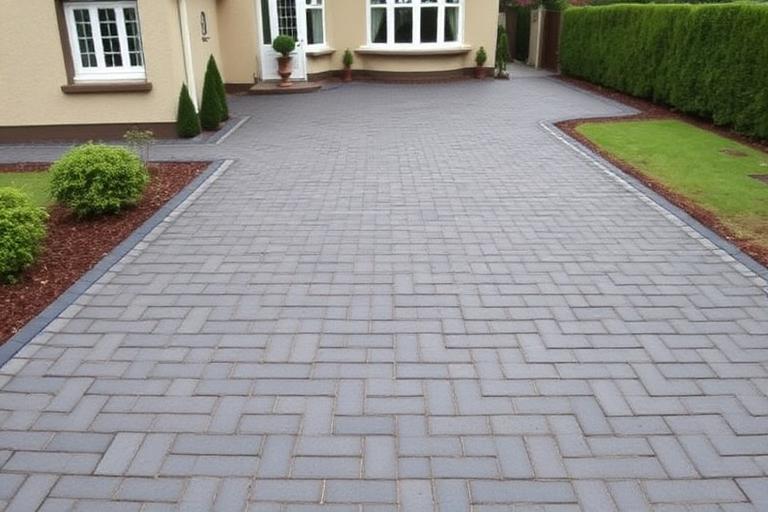
Monoblocking & Slabbing in Ayrshire
Driveways and Patios
Built to Last Decades
Hard-wearing monoblocking, slabbing and paving installed on properly prepared foundations with correct drainage — creating surfaces that stay level, stable and attractive for years.
★ Proper sub-base preparation, correct falls, quality materials — no cutting corners
10+
Years Experience
4.9★
Google Rating
100%
Fully Insured
Free
Estimates
Quality
Materials
What Is Monoblocking and Slabbing?
Monoblocking refers to interlocking concrete block paving — the durable, versatile surface commonly used for driveways, patios and pathways throughout Scotland. Slabbing involves laying individual paving slabs — natural stone, concrete or porcelain — to create patios, garden paths and hard-standing areas. Both require proper groundwork to perform correctly over time.
At Ayrshire Gardening Services, we carry out the full process from excavation through sub-base preparation, edge restraint installation, block or slab laying, and jointing. We work with a range of materials including standard concrete blocks, tumbled effect blocks, natural stone slabs, porcelain paving and pressed concrete slabs.
Who is it for? Homeowners who need a new driveway, patio or pathway. Anyone whose existing monoblocking has sunk, shifted or become overgrown with weeds. Property owners looking to replace an old concrete or tarmac surface with something more attractive and durable.
When is it needed? When your existing driveway is cracked, sunken or puddles badly after rain. When you want off-street parking where there currently is none. When your garden needs a defined patio area for outdoor living. When existing paving has deteriorated beyond reasonable repair. Monoblocking and slabbing can be installed year-round, though we avoid laying in heavy frost.
Why professional installation matters: The visible surface — the blocks or slabs — is only the top 50mm of a structure that may be 300mm deep. The sub-base does the real work: distributing weight, managing water and preventing movement. Without a properly compacted, correctly graded sub-base, even the best blocks will sink, shift and create trip hazards within a few years. Professional installation means correct excavation depth, appropriate sub-base material and thickness, proper compaction, correct falls for drainage and quality jointing that prevents weed growth.
What Happens When Paving Is Installed Badly
Badly installed monoblocking is one of the most common — and most visible — examples of failed home improvement. Blocks that sink create uneven surfaces, trip hazards and water pooling. Joints that are not properly filled allow weeds to colonise, ants to nest and blocks to shift under vehicle weight. Within three to five years, a poorly installed driveway can look worse than the surface it replaced.
The root cause is almost always insufficient groundwork. Skipping the excavation, using the wrong sub-base material, not compacting properly or ignoring drainage requirements — these shortcuts save time during installation but guarantee failure afterward. Remedial work on a sunken driveway typically requires lifting all the blocks, re-doing the sub-base and re-laying — essentially starting from scratch.
Drainage is another critical area where corners are cut. Ayrshire receives significant rainfall and any paved surface must manage that water. Driveways without proper falls direct water toward the house, risking foundation damage and damp. Patios without drainage channels create standing water that makes the surface unusable and damages jointing material.
There are also regulatory considerations. Under Scottish planning rules, if you are replacing a front garden surface with impermeable paving, you may need planning permission unless you include permeable paving or adequate drainage to manage surface water run-off. We advise on this during every quotation to ensure your installation is compliant.
Our Process
How We Work
Site Survey and Design
We assess the area, discuss your requirements and preferences, and recommend the best materials and layout for your budget and intended use. You receive a detailed quotation within 48 hours.
Excavation
We excavate to the correct depth — typically 200-250mm for patios, 250-300mm for driveways. All excavated material is removed from site. We check for services (drains, cables) before digging.
Sub-Base Preparation
MOT Type 1 crushed stone is laid in layers and compacted using a plate compactor or roller. This creates a stable, load-bearing foundation. Falls are set at this stage to direct water away from your property.
Edge Restraints
Concrete edge restraints or kerbing are installed around the perimeter to contain the blocks and prevent lateral spreading. This is essential for long-term stability, particularly on driveways.
Laying and Finishing
Blocks or slabs are laid on a sharp sand or mortar bed, cut precisely to fit edges and obstacles. Joints are filled with kiln-dried sand (monoblocking) or quality mortar (slabbing). The surface is compacted and cleaned before handover.
Why It Matters
The Benefits You Get
Decades of Durability
Properly installed monoblocking and slabbing lasts 25-30+ years with minimal maintenance. The initial investment pays for itself many times over compared to surfaces that need replacing every 5-10 years.
Instant Kerb Appeal
A new driveway or patio transforms the appearance of your property overnight. It is one of the most impactful improvements you can make for the cost.
Increased Property Value
Off-street parking and quality outdoor surfaces are high on buyers' priority lists. A professionally laid driveway adds measurable value to your home.
Low Maintenance
Once installed, monoblocking and slabbing require very little upkeep — an annual pressure wash and occasional weed treatment keeps them looking new.
Excellent Drainage
We set correct falls on every installation and can incorporate linear drains, soakaways and permeable paving where needed. Water is managed from day one.
Wide Range of Finishes
From traditional grey blocks to tumbled sandstone, from contemporary porcelain to natural slate — we work with every material to match your property style.
Materials, Methods and Applications
Concrete Block Paving (Monoblocking)
Standard concrete blocks are available in a wide range of colours, shapes and finishes. Popular options include charcoal, brindle, burnt ochre and natural. Blocks are typically 200x100mm and 60mm deep for patios or 80mm deep for driveways. Laying patterns include herringbone (strongest for driveways), stretcher bond and basket weave. We recommend herringbone for any area subject to vehicle traffic, as this pattern locks the blocks together and resists lateral forces.
Natural Stone Paving
Natural stone slabs — including Indian sandstone, granite, limestone and slate — provide a premium finish for patios and pathways. Each slab has unique colour variation and texture. Natural stone is heavier than concrete and requires a mortar bed for stability. We lay natural stone on a full mortar bed with pointed joints to create a permanent, high-quality surface that improves with age.
Porcelain Paving
Porcelain paving is increasingly popular for its contemporary appearance, consistent colour and extremely low porosity. It does not stain, does not fade, does not support algae growth and cleans easily. Porcelain requires a specific installation method — a primed mortar bed or pedestal system — as its smooth surface does not bond well with standard mortar. We are experienced in porcelain installation and use the correct adhesives and techniques for a lasting result.
Permeable Paving
Permeable paving allows rainwater to drain through the surface into the ground below, reducing surface water run-off and potentially avoiding the need for planning permission on front garden installations. Permeable systems use blocks with wider joints filled with permeable aggregate, or purpose-designed porous blocks that absorb water directly. We install permeable paving systems where drainage regulations require it or where homeowners want an environmentally responsible solution.
Repairs and Re-Laying
Existing monoblocking that has sunk, shifted or become weed-infested can often be lifted, the sub-base corrected and the blocks re-laid. This is typically 40-60% of the cost of a new installation, provided the blocks themselves are in good condition. We assess whether repair or replacement offers better value and advise honestly.
Common Questions
Frequently Asked Questions
Related Services

Get Your Free, No-Obligation
Estimate Today
Most estimates delivered within 24 hours. Fully insured, locally trusted, and committed to results you can see.